Smart Strategies for Dallas County Property Tax Protests: Insider Tips for Maximizing Savings

The Dallas-Fort Worth metroplex represents one of the nation’s fastest-growing real estate markets, with property values rising dramatically across neighborhoods from Lakewood to Las Colinas, Highland Park to North Dallas. While this growth signals economic vitality, it also means Dallas County homeowners face steadily increasing property tax assessments that can quickly become unaffordable. Learning how to strategically approach your property tax appeal can make the difference between financial stress and substantial savings.
Timing Your Protest for Best Results
The Dallas Central Appraisal District typically mails assessment notices in April or early May. You have until May 15th or 30 days after receiving your notice whichever comes later to file your protest. Missing this deadline means accepting the assessment for another full year, regardless of how unfair it might be.
According to the National Taxpayers Union, property owners who file protests early in the season often receive hearing dates sooner and may benefit from more thorough consideration of their cases. Professional services like Tax Cutter monitor these deadlines automatically, ensuring your protest is filed on time every year.
Understanding Market Segmentation in Dallas County
Dallas County isn’t a homogeneous real estate market it’s a collection of distinct submarkets with dramatically different characteristics. Properties in Preston Hollow command premium prices and have different value drivers than homes in Oak Cliff or Mesquite. Understanding where your property fits within these market segments is crucial for building a compelling Dallas County property tax protest case.
The appraisal district sometimes uses comparables from inappropriate neighborhoods or market segments. Location nuances matter enormously in Dallas County’s diverse real estate landscape. The Federal Housing Finance Agency publishes detailed housing market data that can support arguments about neighborhood-specific trends affecting your property’s value.
Leveraging Comparable Sales Data Effectively
Your strongest evidence comes from recent, truly comparable sales. Focus on properties within your immediate neighborhood ideally within a half-mile radius. Look for homes with similar square footage (within 10–15%), built within a few years of your home, with comparable features and condition.
Don’t use listing prices or pending sales only completed transactions provide reliable evidence of market value. The Texas Real Estate Research Center offers comprehensive sales data and market analysis that can strengthen your argument when properly applied to your specific situation.
Addressing Property-Specific Issues
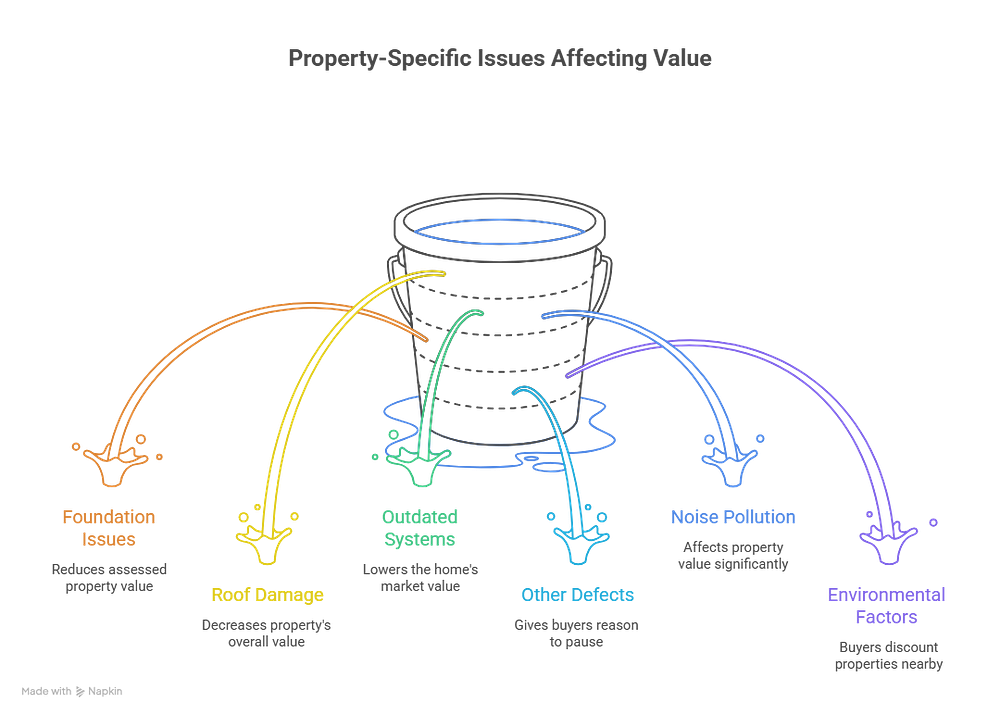
Every property has unique characteristics that affect value. If your home has foundation issues, roof damage, outdated systems, or other defects, these problems should reduce your assessed value. Create a comprehensive visual record of any property issues. Photograph foundation cracks, water damage, dated systems, and any other conditions that would give buyers pause. Obtain written estimates from licensed contractors for necessary repairs.
Even seemingly minor issues matter. Properties on busy streets experience noise pollution that affects value. Homes near commercial zones or under flight paths face environmental factors that buyers discount. Document everything that distinguishes your property from the “ideal” home the appraisal district assumes.
Mastering the Unequal Appraisal Argument
While market value protests are most common, unequal appraisal arguments often prove more effective. Texas law requires the appraisal district to treat similar properties similarly. If your assessment is higher relative to market value compared to neighboring properties, you have valid grounds for a Dallas County property tax protest based on unequal treatment.
This argument requires statistical analysis comparing assessment-to-sale-price ratios for comparable properties in your area. Professional tax consultants excel at this type of analysis because they have access to comprehensive databases and analytical tools.
Why Professional Representation Matters
The appraisal district employs experienced staff who attend hundreds of hearings annually. As an individual homeowner, you’re at an inherent disadvantage in this experience gap. Professional property tax consultants’ level the playing field. They understand Dallas County’s real estate market intimately and know exactly how to present evidence for maximum impact.
Tax Cutter specializes in Dallas County protests and consistently achieves higher success rates than property owners representing themselves. Most professional services work on contingency you only pay if they successfully reduce your assessment, which means you risk nothing by having experts handle your case.
Protecting Your Long-term Financial Interests
A successful protest creates benefits extending far beyond immediate tax savings. Your reduced assessment establishes a lower baseline for future years, meaning you’ll pay less even when property values increase. A $25,000 reduction in assessed value saves approximately $500–600 annually at typical Dallas County tax rates. Over ten years of homeownership, that’s $5,000–6,000 in savings from one successful protest.
Working with Tax Cutter means you benefit from professional expertise year after year without having to manage the process yourself. Their team monitors your property automatically, files protests when appropriate, and handles all hearings on your behalf ensuring you never overpay on property taxes while you focus on other priorities. Dallas County’s dynamic real estate market creates both opportunities and challenges for homeowners, and strategic protest approaches protect you from overpaying while ensuring fair treatment under Texas law.


Comments
Post a Comment